Morocco’s culture and religion are deeply connected, shaping everyday life, traditions, and social values across the country. When exploring Morocco culture and religion, you’ll notice a unique blend of Arab, Berber (Amazigh), and Islamic influences that define the nation’s identity.
Morocco is a predominantly Muslim country, with Islam playing a central role in daily life, customs, and celebrations. At the same time, the country is known for its diversity, tolerance, and historical coexistence of different cultures and religions.
If you are planning a cultural journey, you can explore authentic experiences through the Morocco tours to better understand how culture and religion shape travel across the country.
What Is Moroccan Culture?
Moroccan culture is a mix of traditions, languages, arts, and social practices influenced by centuries of history.
It includes:
- Traditional clothing
- Food and cuisine
- Music and art
- Social customs and values
This cultural richness makes Morocco one of the most unique destinations in North Africa.
Religion in Morocco
Religion is a fundamental part of Moroccan life.
Islam in Morocco
Islam is the official religion, and the majority of Moroccans are Sunni Muslims.
It influences:
- Daily routines (prayer times)
- Holidays (Ramadan, Eid)
- Social behavior and values
Mosques play an important role in communities, and religious practices are respected throughout the country.
Christianity in Morocco
Christianity exists as a minority religion in Morocco, mainly among expatriates and small local communities.
Churches can be found in major cities like:
- Casablanca
- Rabat
Other Religions in Morocco
Morocco also has a historical Jewish community, which has contributed significantly to the country’s culture, architecture, and traditions.
Languages Spoken in Morocco
Language is an important part of Moroccan culture.
Arabic
Modern Standard Arabic is the official language, used in:
- Government
- Education
- Media
Darija (Moroccan Arabic)
Darija is the everyday spoken language and differs from standard Arabic.
Amazigh (Berber Languages)
Amazigh is widely spoken in different regions and is an official language.
French and Other Languages
French is commonly used in business and tourism, while Spanish is spoken in northern regions.
Moroccan Traditions and Customs
Moroccan traditions reflect strong family values and community ties.
Key customs include:
- Hospitality and welcoming guests
- Respect for elders
- Traditional celebrations
These customs are an important part of daily life.
Moroccan Food Culture
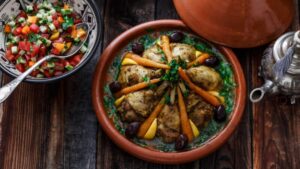
Moroccan tajine is a key part of Morocco culture and religion, reflecting traditional cooking and shared meals.
Food plays a central role in Moroccan culture.
Popular dishes include:
- Tagine
- Couscous
- Pastilla
Meals are often shared with family, emphasizing togetherness.
Moroccan Clothing and Dress Code
Traditional clothing in Morocco includes:
- Djellaba
- Caftan
- Takchita
These outfits are worn during special occasions and reflect cultural identity.
Moroccan Music and Arts
Moroccan music and arts are diverse and influenced by different regions.
Music
Styles include:
- Andalusian music
- Gnawa music
- Chaabi
Arts and Crafts
Morocco is known for:
- Zellige tilework
- Carpets
- Pottery
These crafts reflect centuries of tradition.
Moroccan Festivals and Celebrations
Morocco hosts many festivals throughout the year.
Examples include:
- Religious festivals (Eid)
- Cultural festivals
- Music festivals
These events showcase Moroccan heritage and traditions.
Moroccan Social Etiquette
Understanding social etiquette is important when visiting Morocco.
- Greet people politely
- Dress modestly in traditional areas
- Respect local customs
These practices help create a positive travel experience.
How Culture and Religion Influence Travel in Morocco
Culture and religion shape the travel experience in Morocco.
For example:
- Prayer times affect daily schedules
- Cultural norms influence dress and behavior
- Traditional values impact interactions
Travelers can explore these aspects through routes like:
Is Morocco a Religious Country?
Yes, Morocco is a religious country where Islam plays a central role. However, it is also known for its openness and cultural diversity.
What Makes Moroccan Culture Unique?
Moroccan culture stands out because of its combination of:
- African influences
- Arab traditions
- European connections
This blend creates a unique cultural identity.
FAQs:
What is the main religion in Morocco?
Islam is the main religion, with most Moroccans being Sunni Muslims.
What languages are spoken in Morocco?
Arabic, Amazigh, and French are widely used.
Is Morocco culturally diverse?
Yes, Morocco has a mix of Arab, Berber, and European influences.
Do tourists need to follow cultural rules?
Yes, respecting local customs and traditions is important.
Is Morocco safe for different religions?
Yes, Morocco is generally tolerant and welcoming to visitors.
What is Moroccan culture known for?
Hospitality, cuisine, traditions, and craftsmanship.